Aston, Birmingham
Huzefa Vorajee grew up in Aston, Birmingham, in a working-class family that did not separate home from work. His parents ran a parcel-distribution business out of the family house: vans in the morning, manifests in the evening, and a kitchen table that doubled as an office. He was building the spreadsheets for it as a child — first because someone had to, then because he was better at it than anyone else in the room.
Nothing was handed over in that house. If he wanted something, the answer was usually that he could earn it, and that framing has never really left him. He also had an example in the family: his maternal grandfather was an accountant. When someone asked the eight-year-old Huzefa what he wanted to be when he grew up, he said “an accountant” — and, unusually for an eight-year-old, meant it.
“I never wanted to be given things. I wanted to know what they cost and then go and earn them.”
The instinct for business
By 16 he was trading. Phone cases and consumer electronics, sourced cheaply, sold through eBay and hand-to-hand around college — the sort of small, unglamorous operation that teaches margin, cash flow and customer expectations faster than any textbook. In the evenings he taught at the mosque. It made for long days, and it set a pattern he still runs on: work that funds independence, alongside work that serves the people around you.
That period taught him the two things he still tests every business idea against. First, that revenue is not profit. Second, that people buy from someone who tells them the truth about what they are getting.
Into the profession
He chose an accounting apprenticeship over university — deliberately, not by default. He wanted the client work, the deadlines and the money coming in while his peers were accumulating debt. He qualified AAT while working.
His first role was at Sigma Chartered Accountants, and he made a point of not being siloed. Bank analysis. Payroll through the RTI transition, when the whole of the UK moved to real-time reporting and every employer needed hand-holding. Statutory accounts. Charity accounts, with their own reporting regime and their own kind of scrutiny. Working across the full practice rather than in one function is why, more than a decade later, he can sit in a meeting and see the whole file rather than one corner of it.
On his own at 19
At 19 he set up his own practice. There was no client list and no network to inherit, so he knocked on doors — literally, business by business — until someone said yes. He took an office in Birmingham’s Jewellery Quarter, which felt like arrival at the time and turned out to be an education in overheads.
The hard lessons arrived early and cheaply enough to survive: that marketing is a discipline rather than a hope; that fixed costs are decisions you keep paying for; and, most importantly, that having a business is not the same thing as having built one. A client list is not a system. Being busy is not being profitable. He carried that distinction into everything that followed.
“Having a business and having built a business are two completely different things. It took me a while, and some money, to learn the difference.”
Seven years at TaxAssist Accountants
In January 2018 he joined Kully Sahota’s TaxAssist Accountants practice and became its operational engine. Sales and client acquisition. Systems and process design. The software migration that took the practice off paper and into the cloud. KPI frameworks so performance was measured rather than argued about. And, over seven years, the team culture.
Culture is the part he is most opinionated about. His view is simple: nobody should dread Monday. If people are counting down the hours in your firm, that is a management failure, not a staffing one. And you should always hire someone cleverer than you — the moment you are the smartest person in your own business, you have capped it.
SK1PR
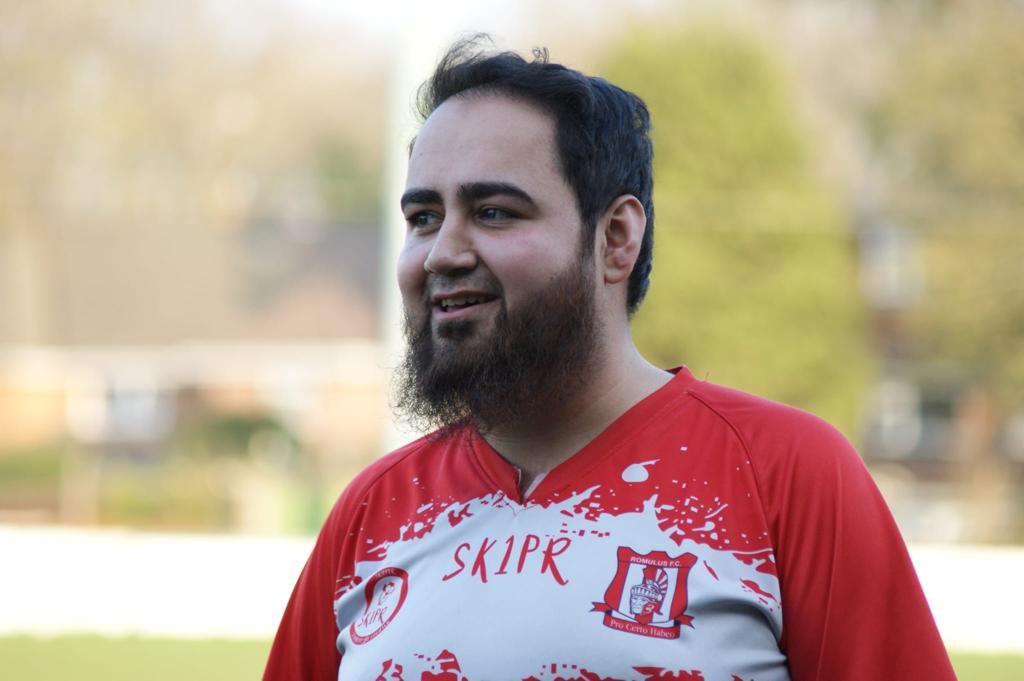
Alongside the practice, he founded SK1PR — a bespoke football teamwear brand built for volunteer-run non-league clubs that had been priced out by the major kit manufacturers. He knew the customer intimately, because he had spent years inside that world: club treasurers funding kit out of subs and raffles, coaches ordering from a catalogue that never quite fitted.
He built it through COVID, when grassroots football stopped entirely. An early supplier went bad and cost him around £5,000 — real money at that stage. He rebuilt the supply chain with a manufacturing partner in Pakistan who, over four years, became family rather than a vendor, and scaled the brand to profitability.
He owned and ran SK1PR for four years before selling the majority stake. There was a higher bid on the table. He took the buyer who would carry the legacy forward instead — because the brand existed to serve clubs that nobody else was serving, and selling it to someone who would strip that out would have made the previous four years pointless.
Sharjah & Dubai
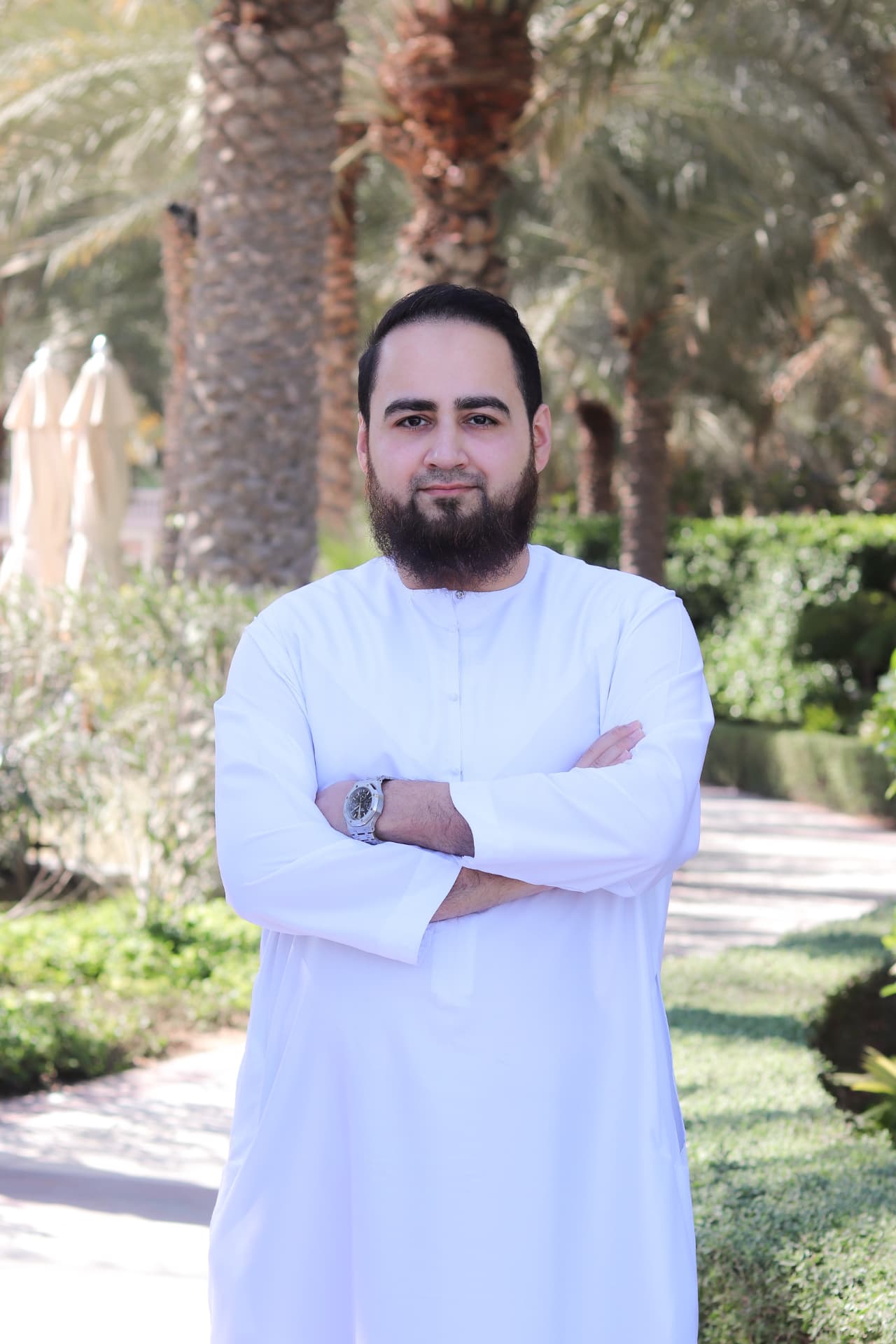
He moved to the UAE at 29, with his wife and a seven-month-old daughter. It was not an opportunistic move; it was a decision about where he wanted to raise a family, taken early enough that the family would grow up here rather than be relocated later. He settled the family in Sharjah — quieter, more rooted, a place to bring up children — while keeping the business in Dubai, where the work is.
He founded Evolve Tax to fix something he watched happen to expat business owners repeatedly. They were treated as walking ATMs by commission-driven setup agents. They were sold off-the-shelf packages that did not match their business. Costs were undisclosed until they were unavoidable. And once the licence was issued — the only part the agent was paid for — there was no ongoing compliance support at all, which is precisely when a business in the UAE starts to need it.